It is very important to get to know your Guinea Pig! Why? Because it’s easier to spot the signs that something is wrong.
Every 3 months, it is recommended that Guinea Pigs should be checked over by a Vet. Owners should check their Guinea Pigs daily/ weekly to make sure all is ok.
Guinea Pigs have a specific mannerism which impacts on their health care needs and requirements.
So what are some?
- Guinea Pigs can’t stand heat and are highly sensitive to it. They are prone to heatstroke, so you need to make sure they don’t overheat.
- Guinea Pigs can’t tolerate high humidity, so you should use a dehumidifier to prevent ill health. Damp and draughty environments should also be avoided.
- Guinea Pigs have low sugar intolerance, so you should limit fruits, food containing chemical colouring and avoid dry foods (pellets, nuggets and mixes) containing sweeteners like molasses.
- Boars (Baby Guinea Pigs) have to be removed from their mothers at 3-4 weeks of age, because they are sexually mature at that age and can get their mothers pregnant.
- Male Guinea Pigs should not be castrated, to stop fighting. It rarely works. The only time castration is recommended is so that males can live with other females.
- Male Guinea Pigs ejaculate and sometimes a white worm like substance on or from a boars penis is sperm, not a bladder worm.
- Guinea Pigs should be wormed as they are exposed to parasitic contamination and are not immune from it.
- Younger Guinea Pigs will show behaviour more frequently. This is called popcorning.
Daily Checks
On a day to day basis you need to ask yourself these 5 questions. These will be the main signs of anything being wrong.
- Are they eating and drinking normally?
- Are they breathing normally?
- Are they moving around normally?
- Is their behaviour normal?
- Are they peeing and pooping normally?
If any of these aren’t normal, i would firstly recommend you to call the vet at the earliest opportunity. You should remove the affected Guinea Pig, so you can closely keep an eye on them. This can either be done in a separate cage, run or on your lap (if they will stay there for a long period of time)
Remember Guinea Pigs are prey animals and will hide any illnesses from us until they are really suffering.
Weekly Checks
Every week, it is recommended that you give your Guinea Pig a thorough check over. This will involve the following:
- Ears
- Eyes
- Nose
- Lips
- Teeth
- Hair
- Skin
- Genitals
- Greasegland
- Abdomen
- Feet
- Nails
If you are not comfortable carrying out these checks you can always take your Guinea Pig to be checked by a professional, or if a friend or family member knows what they’re doing with Guinea Pigs, then they can also carry out these checks.
More Depth For Weekly Checks
Ears
All ears should be free from crust and white marks – White marks could indicate fungal infection or ear mites and should be taken to the vet.
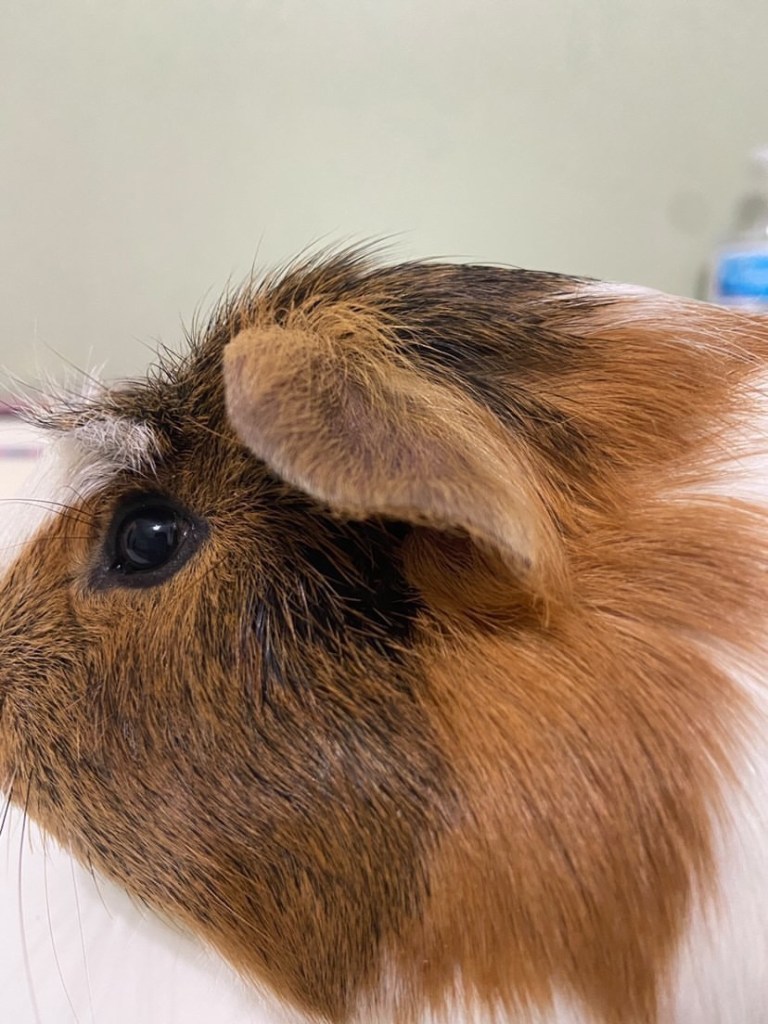
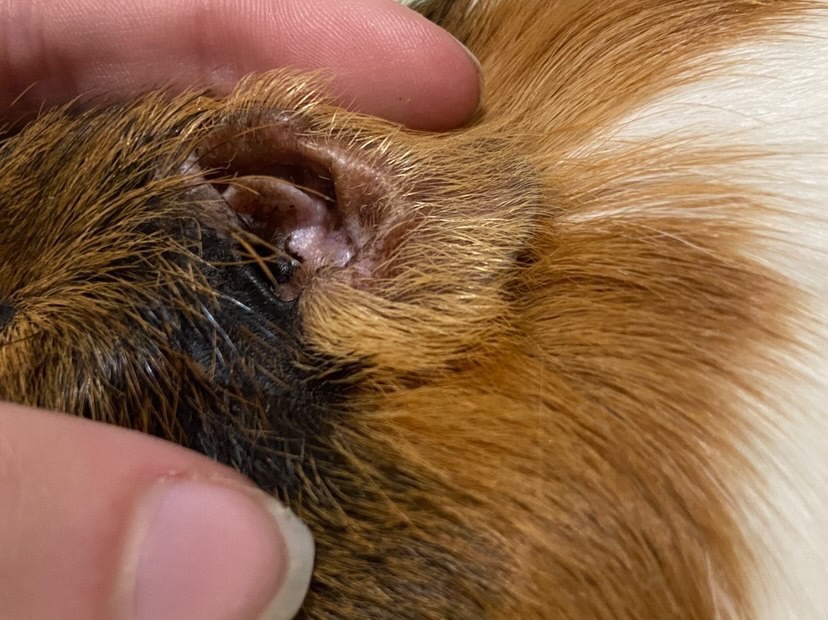
To check the ears – Look and feel the skin around the ears, on the back and inside the ear flap for grainy residue, wax, inflammation, discomfort and odour.
Eyes
A healthy Guinea Pig eye should be clear, shiny and alert. If crusty, watery, dull, cloudy or bulging, then your Guinea Pig needs to be taken to the vet as it could either be an injury, infection, inflamed, fatty or even cataracts.
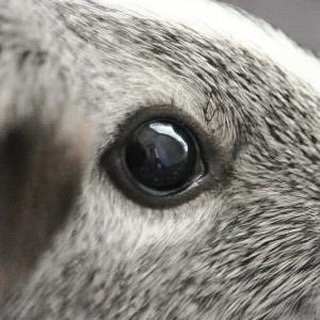
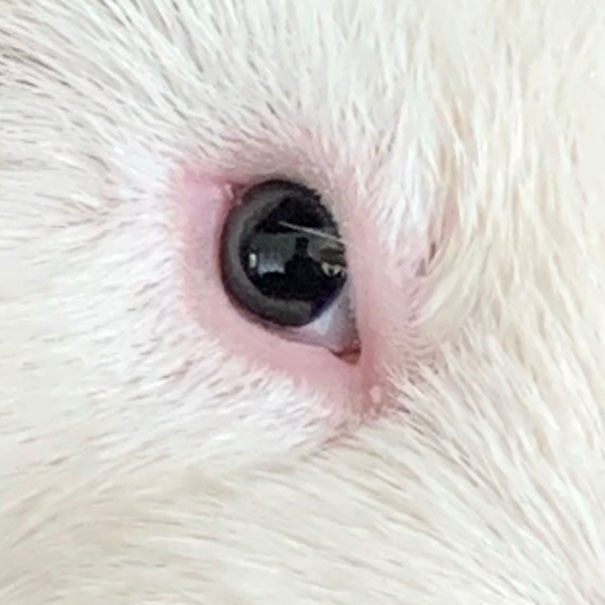
To check the eyes – You should check the skin and hair around the eye and the eye itself. Look for sunken eyes, clouding, discharge, foreign bodies and fatty tissues under the eyelids.
Nose
A healthy nose should be dry and clean. Not runny. If your Guinea Pig is sneezing or has discharge coming out of their nose, this could suggest your Guinea Pig had a cold. This can be easily treated, however can turn into something more serious (pneumonia) if not treated quickly.
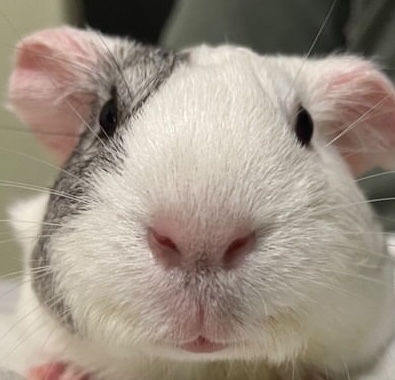
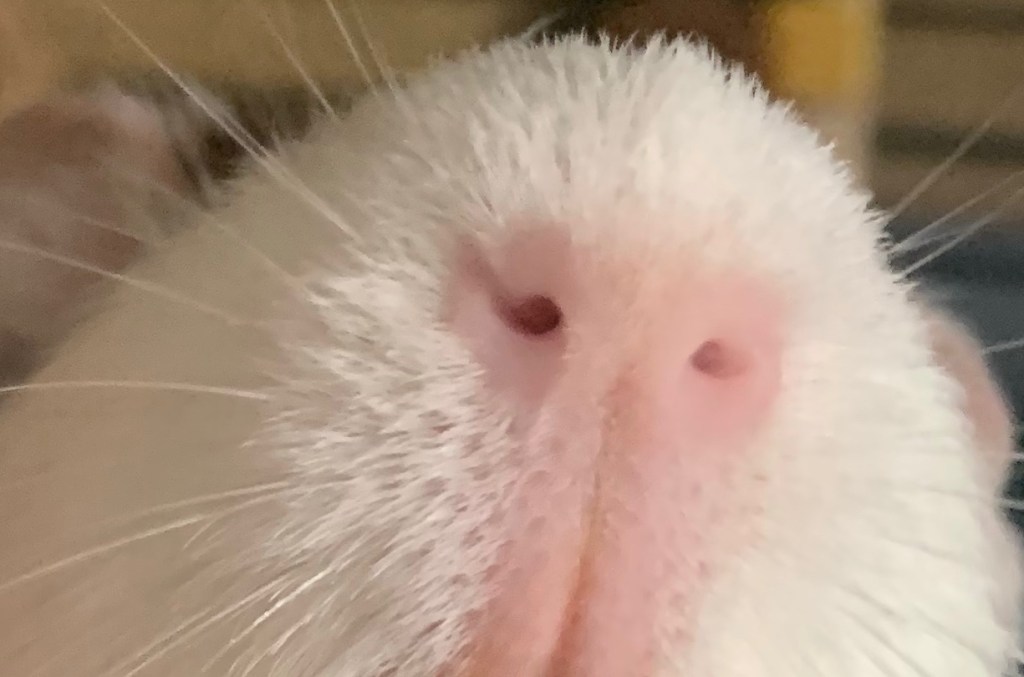
To check the nose – The hair and skin around the nose should be clean. There shouldn’t be any hair loss around the nose, scabbing or redness.
Lips
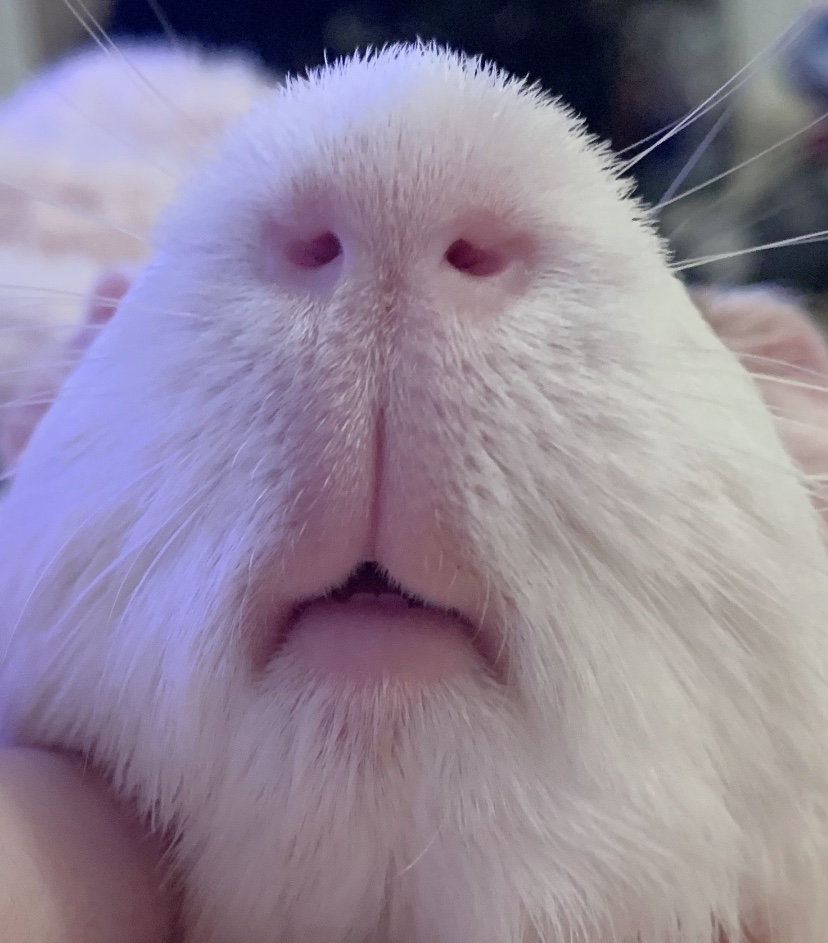
Healthy lips on a Guinea Pig should have no hair loss or scabbing on or around the lips.
You should look all around the lips, even on the inside if you can get to it. You shouldn’t see any flakiness or dryness around the lip area. If you do this could mean a fungal infection.
Teeth
Guinea Pigs teeth constantly grow, so it is very important to do a thorough check to make sure all is fine with them, because it can be hidden well.
Dental problems are usually secondary to another illness.
Guinea Pigs have upper and lower incisors. They should be strong, white, evenly worn and not slanting. The lower incisors should sit a little further back then the front ones.
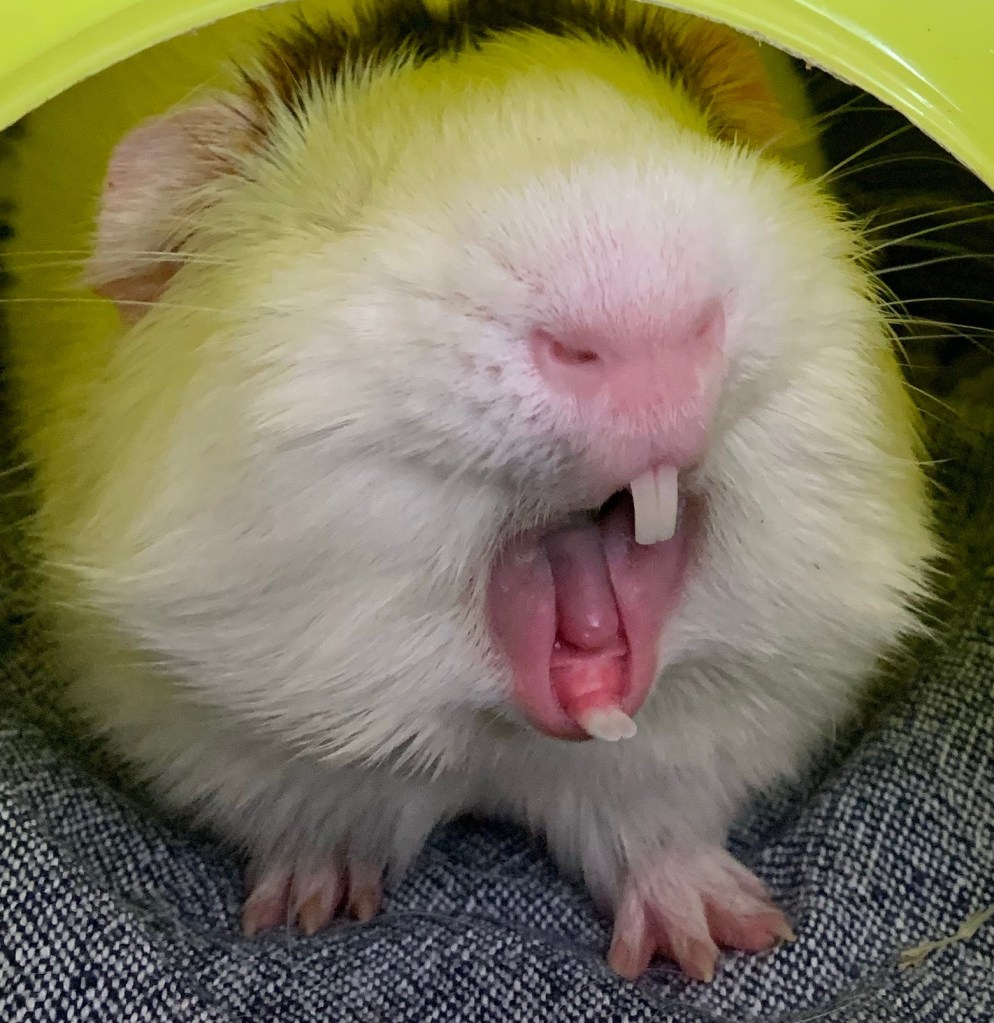
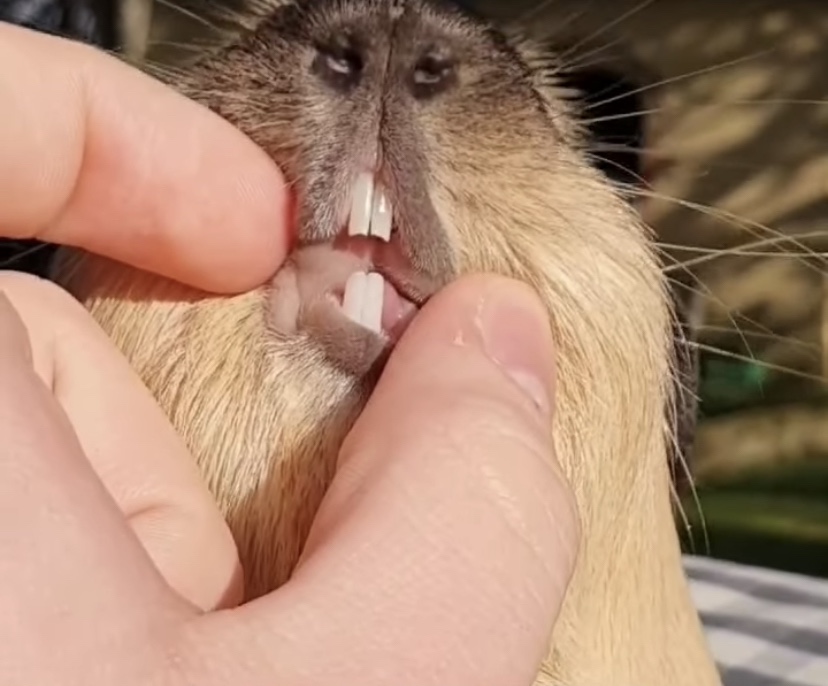
To check the teeth – You should wrap your Guinea Pig in a towel, so that they are safe from any injuries snd then slowly place your pinky finger into their mouth and feel around especially at the back, due to not being able to properly see the molars without a special tool. Feeling around will help you know wether they are too overgrown or not.
Skin/ Hair
Guinea Pigs skin and hair should be clean and free from dandruff, flakiness and scabbing. There should also be no lumps or bumps
Lumps can be signs of Abscess, Fatty Lumps, Mammary Tumours, Cysts or Swollen Lymph Nodes/Glands
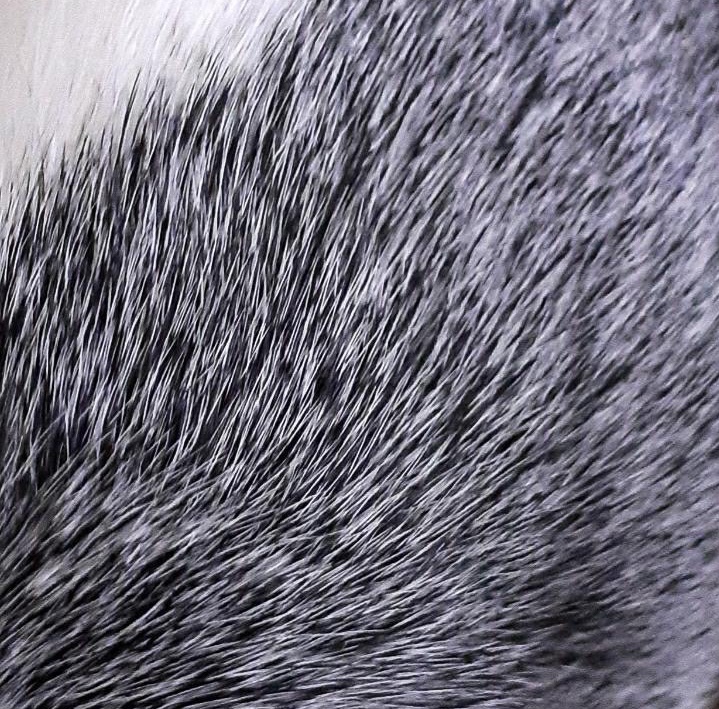
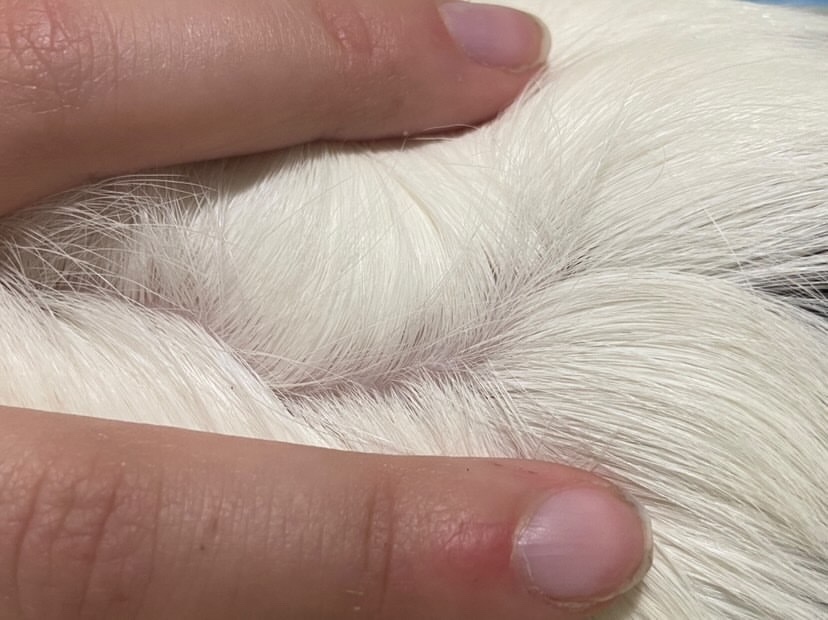
To check the hair and skin – As you pet your Guinea Pig, slowly part the hair and check the skin that is underneath. Check for dandruff, flakiness, scabbing and as you’re stroking your Pig, feel for any lumps or bumps. If female, check for hair thinning, loss on the flanks which may indicate a hormonal problems.
Grease Gland
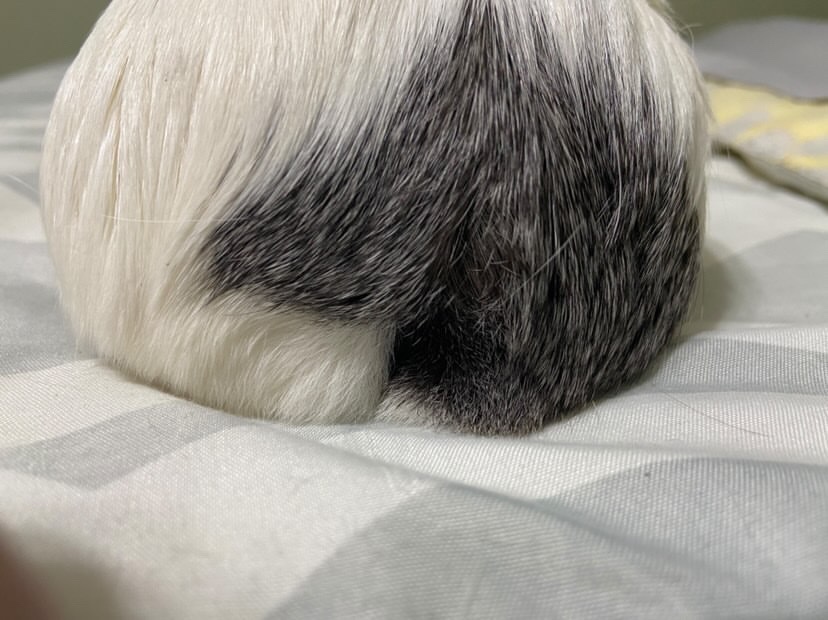
The grease gland should be free of Grease build up. Some Guinea Pigs will constantly have a messy grease gland. You can help by regularly cleaning it.
If you leave the Grease Gland to build up, you can cause infections.
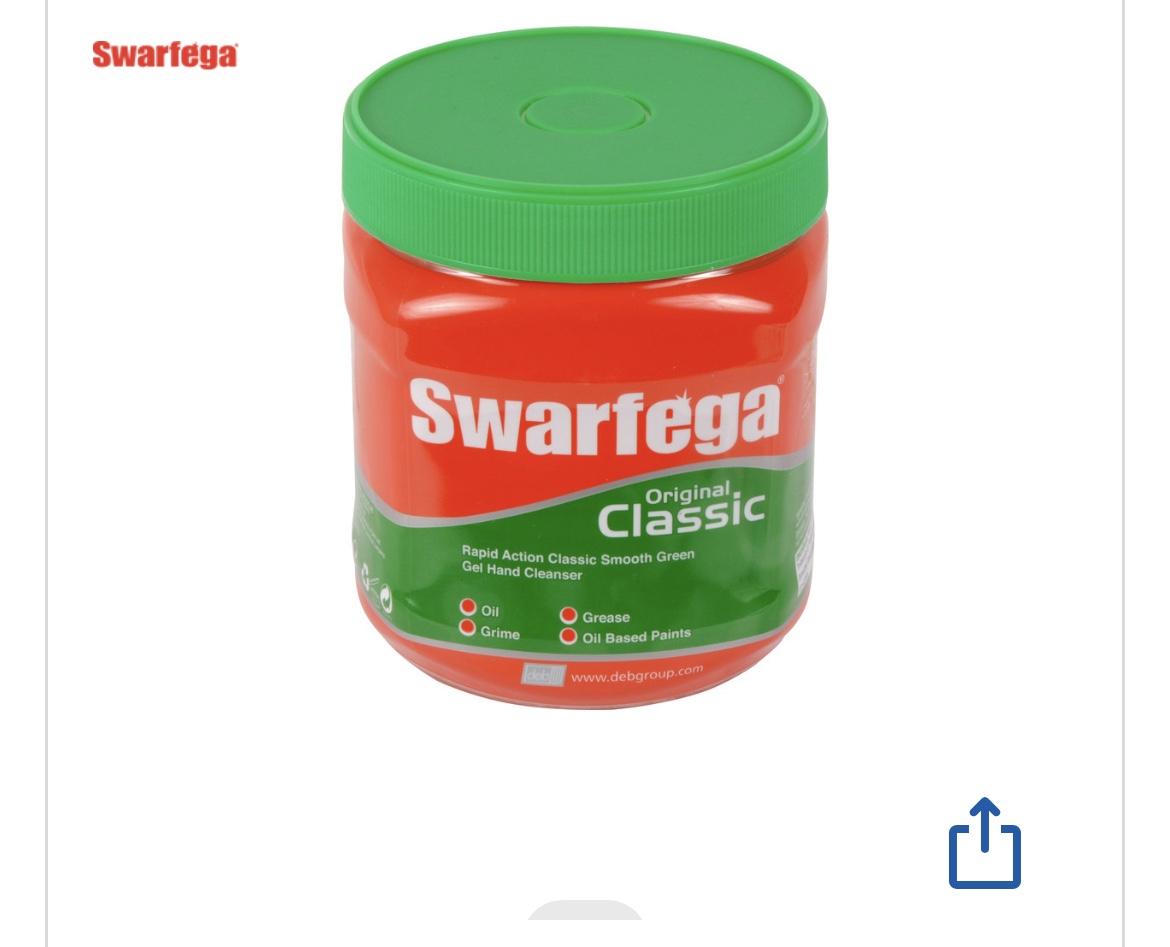
To clean a Grease Gland: We firstly shave the area and then give them a bath using Swarfega. It is perfectly safe for Guinea Pigs. It needs to be used and treated like a shampoo Make sure it’s throughly washed out. Apply coconut oil on the skin afterwards to keep their fur/skin smooth
You can also use coconut oil on cotton pads and ear buds to clean.
Genitals
Males
Male Guinea Pigs should have a clean penis and anal sac. If it is a little dirty, you can use cotton buds and coconut oil to clean it out.
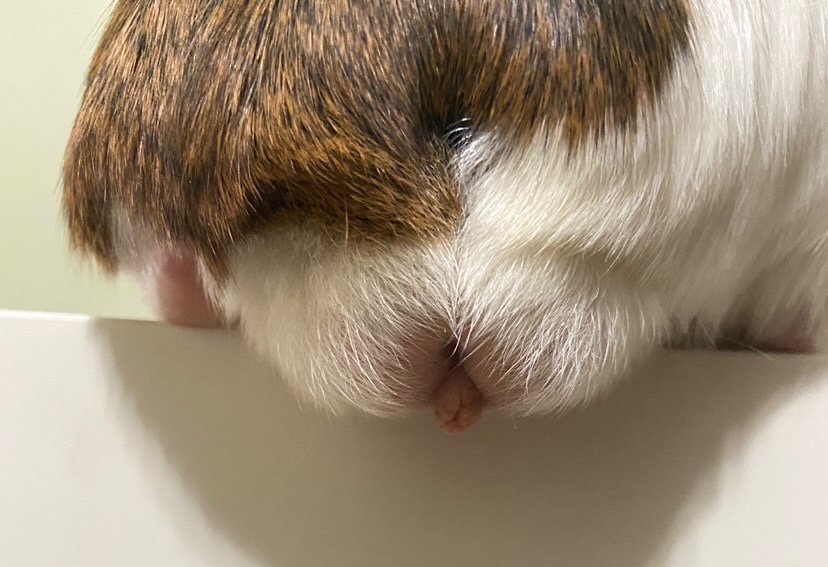
To check the penis and anal sack – fully extrude the penis to check for debris and any gritty/ sandy textured deposits. Check the anal sack for signs of faecal impaction or a grey fungal lining.
Females
Females should have a clean vaginal area and can be cleaned with baby wipes or cotton pads or balls with coconut oil on them.
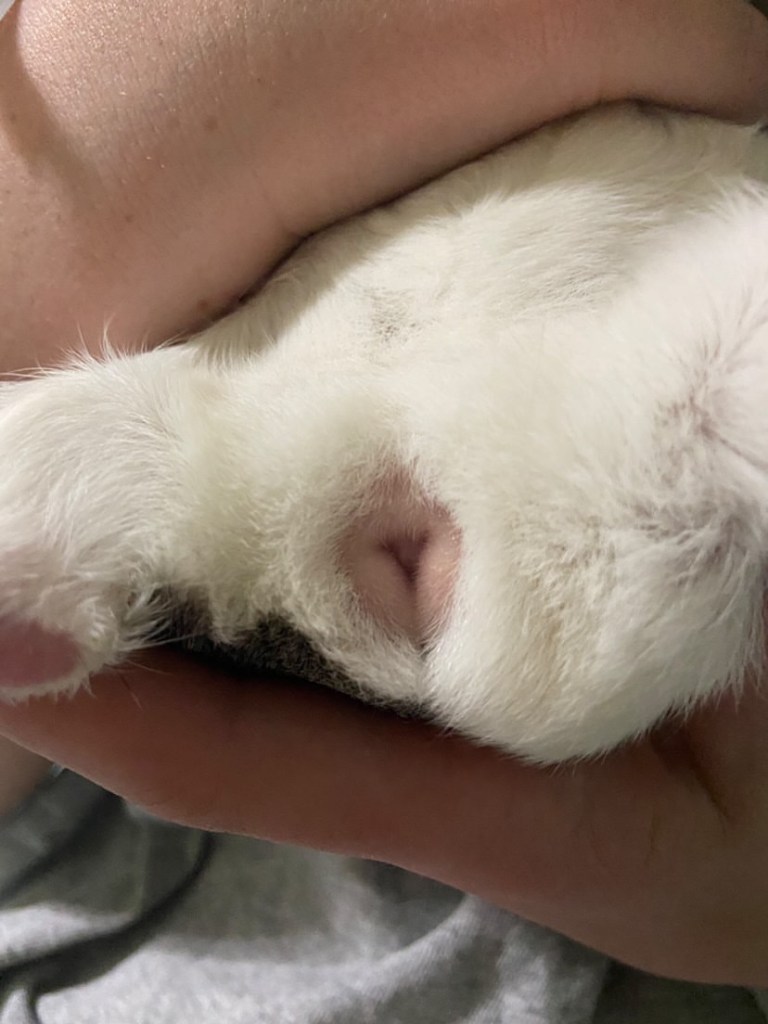
To check the vagina – check the urethral opening for signs of urethral stones
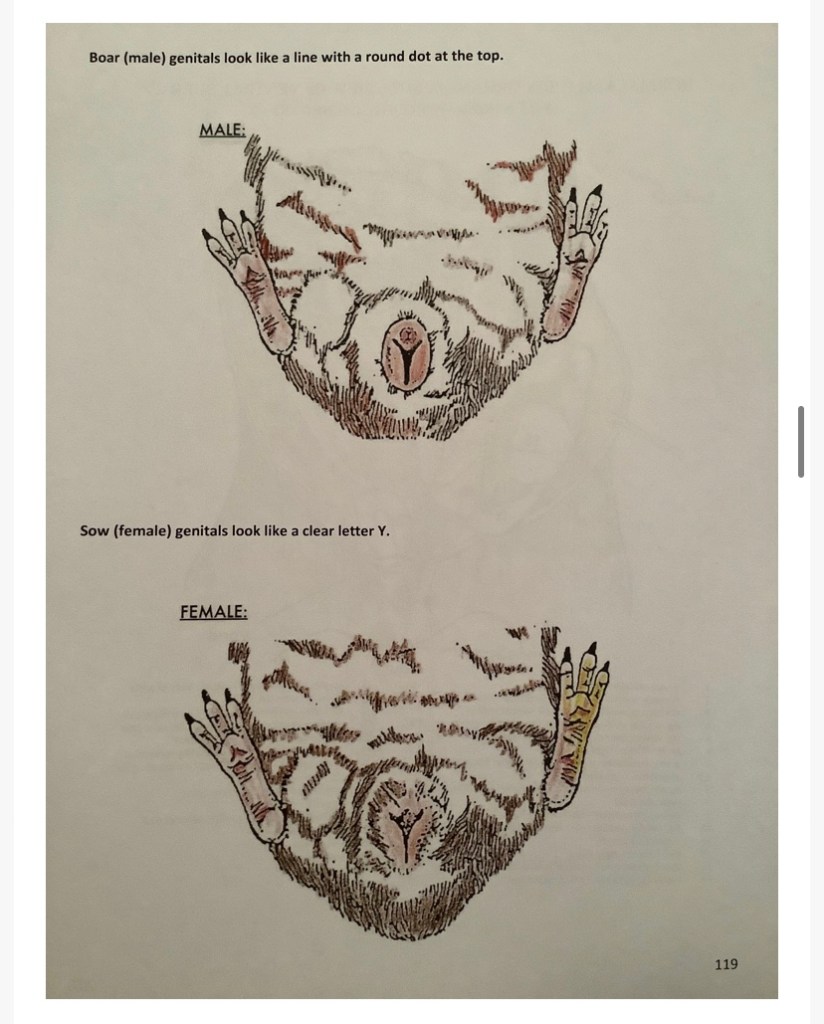
If you find it hard to sex Guinea Pig here is a diagram below
Abdomen
A Guinea Pigs abdomen should feel soft and squishy. They shouldn’t have any pain or any tightness and their breathing should be steady.
Also check for lumps when feeling around the abdomen, because lumps can be signs of Abscess, Fatty Lumps, Mammary Tumours, Cysts or Swollen Lymph Nodes/Glands.
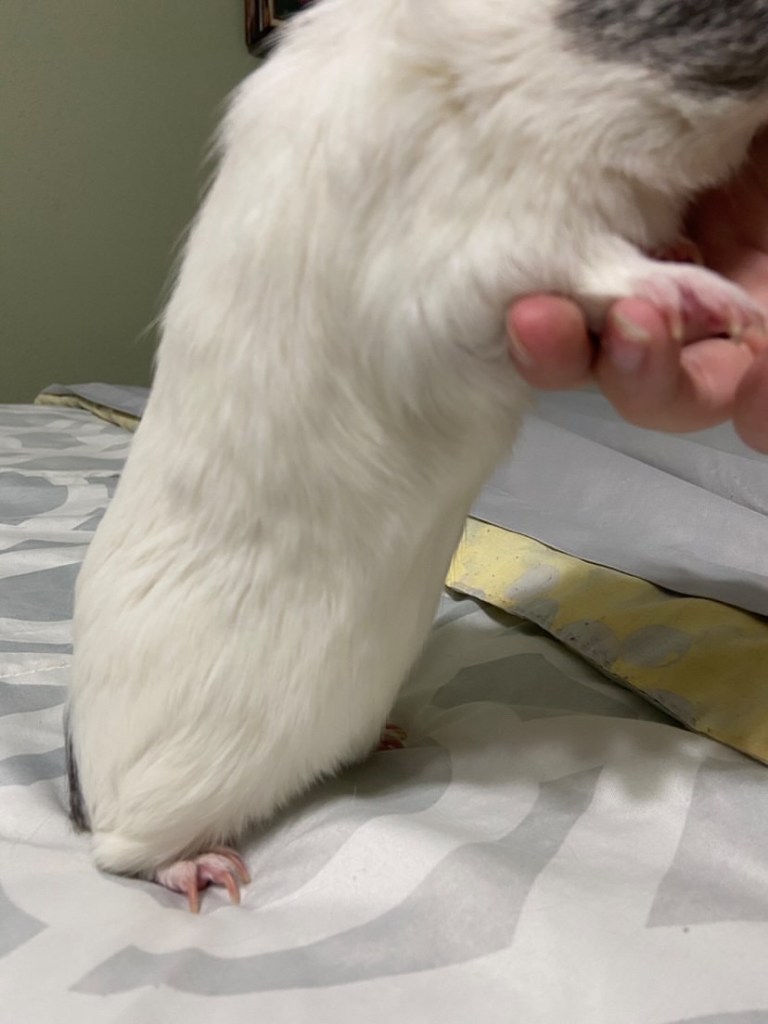
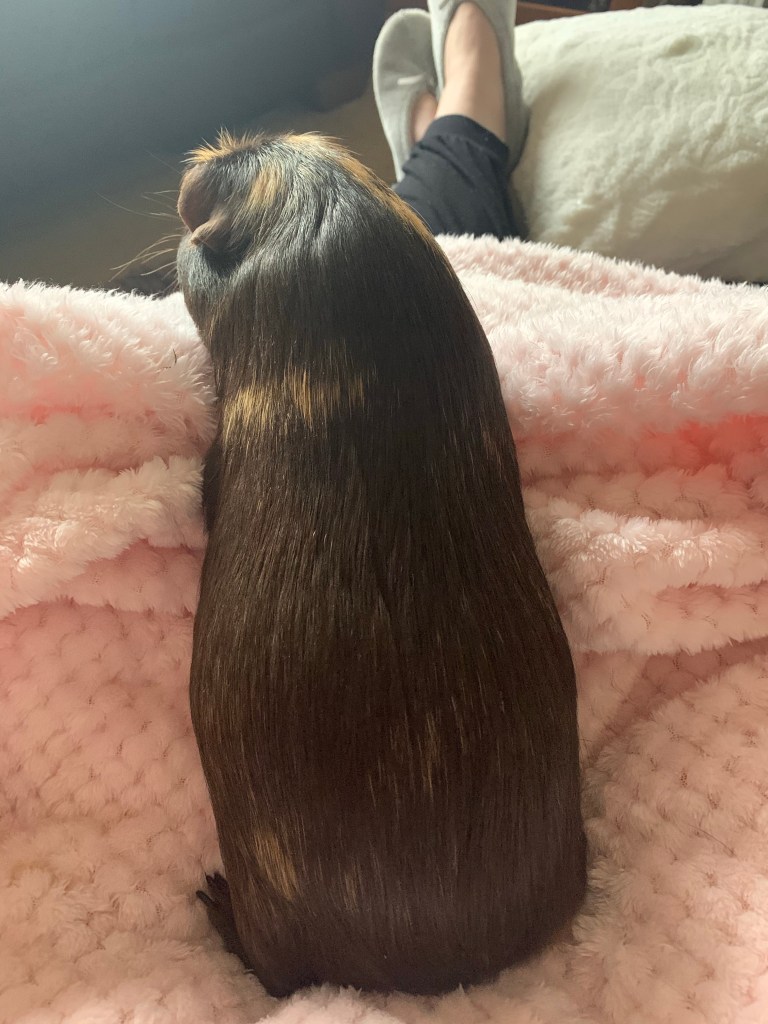
To check the abdomen – Palpate at the abdomen checking for discomfort, tightness, distension or fluid build up. If female palpate at the base of the rib cage for any lumps (ovarian cysts)
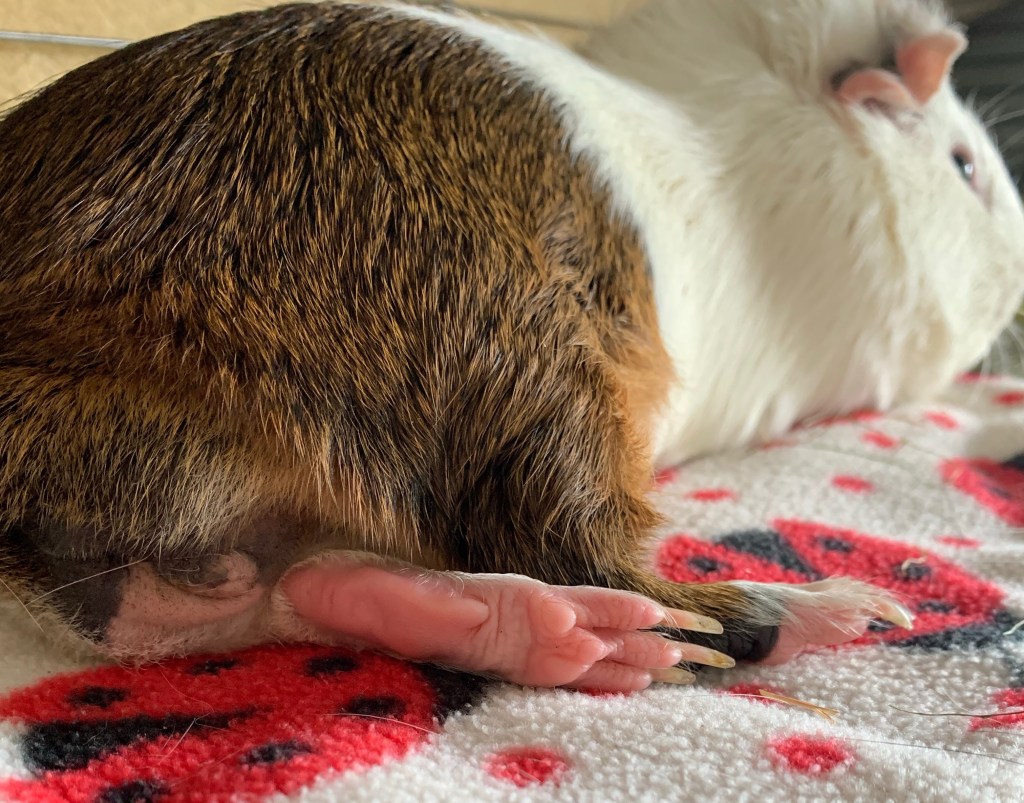
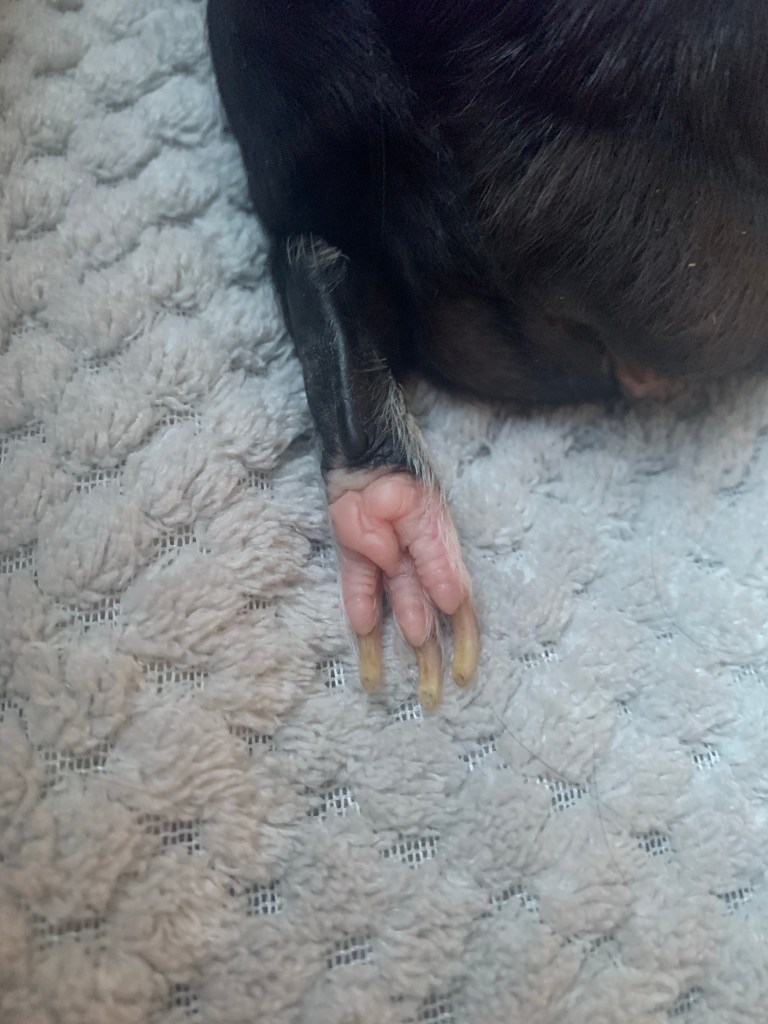
Feet
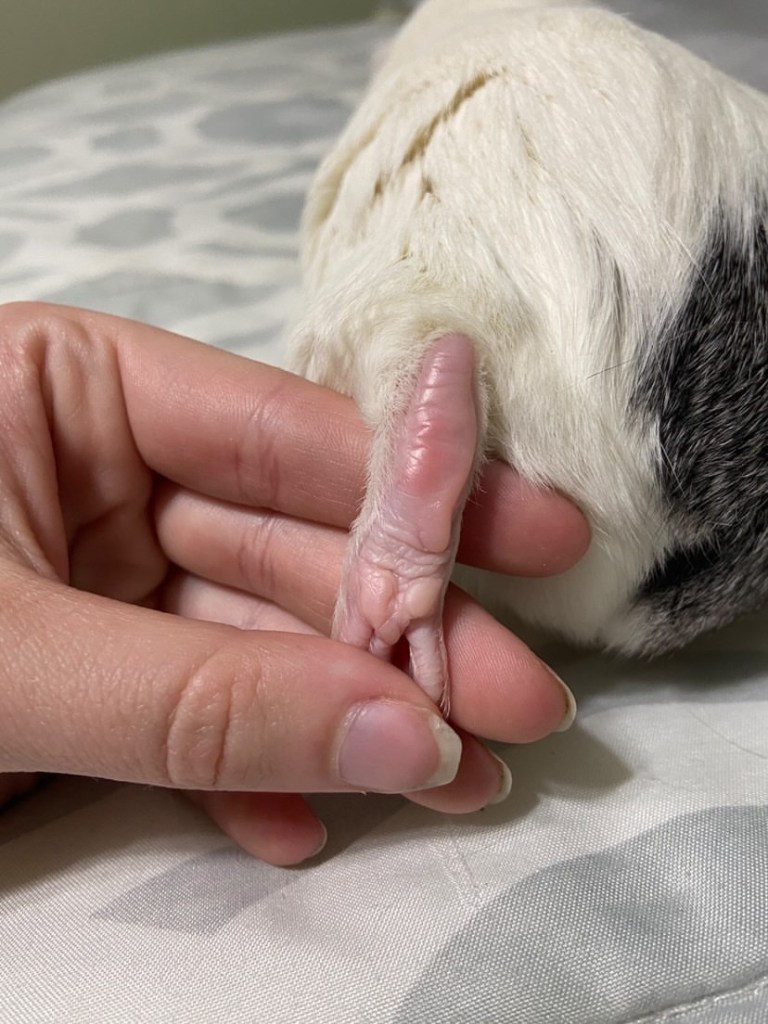
Guinea Pigs feet should be clean, smooth and free from scabbing.
If Guinea Pigs do have scabbing then they probably have bumblefoot
Nails
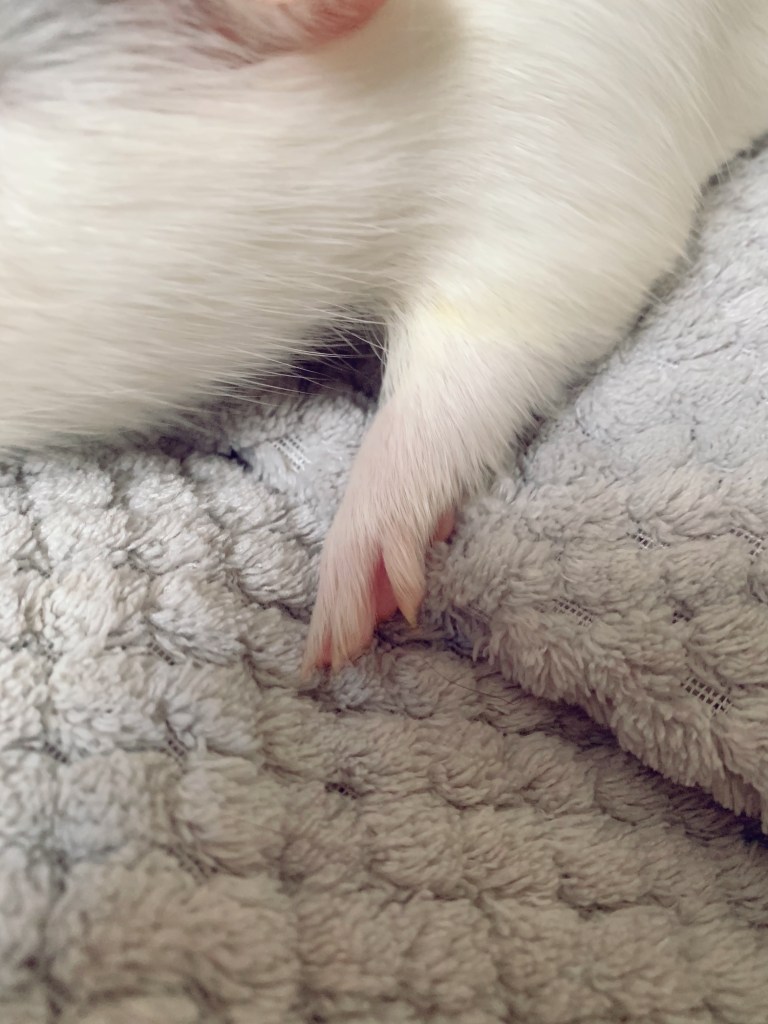
A Guinea Pigs nails should be straight, not too long and not curled.
Their nails need to be cut every 2-4 weeks. You can either do this yourself (if you know what you’re doing) or by a professional, family or friend member, who knows what they’re doing.
Each nail has a blood vessel or quick running down its centre. Just like dogs do. If your guinea pig has white nails this will be easy to see, and you can trim just the tip of the nail, avoiding the quick. With darker nails it is a lot harder to know where the quick is, so I leave it to someone who has experience in cutting nails.
Come back next Sunday for more interesting facts about Guinea Pigs!
 Lokiandthor18